


Tessa Charupatanapongse, Investment Lead, Potato Impact Partners
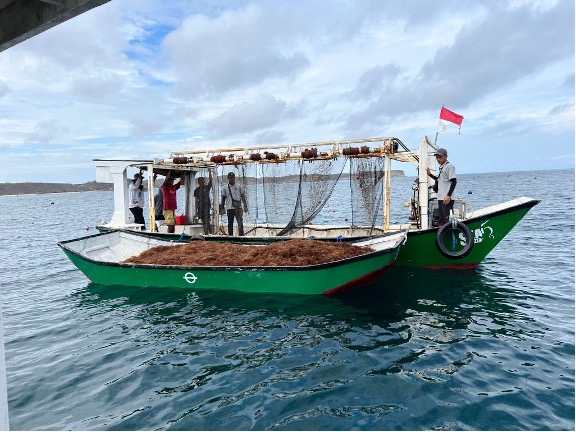
When tourism in Southeast Asia came to a halt during the COVID-19 pandemic, creating economic struggle, many coastal communities found resilience in a tradition that’s deeply rooted in the region’s recent history: seaweed cultivation. With its applications in food, biostimulants, animal feed, and more, seaweed farming allowed the locals to diversify their sources of income beyond tourism, fishing, and land agriculture. Since we began investing in the sector three years ago, we’ve had the inspiring opportunity to visit seaweed farms in Indonesia and the Philippines, where we witnessed seaweed’s impact on sustaining the livelihoods of farmers on the ground.
We met Agus, whose father, I Made Simbik, was among the pioneers of seaweed farming in Indonesia after the practice was brought there from the Philippines in the 1970s. Agus now leads Indonesian farm operations at Sea6 Energy, which develops sustainable, seaweed-based solutions for agricultural production and climate resilience. We also paid a visit to Coast 4C, where smallholder seaweed farmers are making a transition to more sustainable, regenerative farming in the Philippines—effectively protecting marine ecosystems while improving their practice with better-quality seedlings and science-based guidance.
For these farmers, seaweed is more than a source of income: it’s their way of building a sustainable livelihood for themselves and coastal generations to come. The potential for impact is only one of the reasons why Potato Impact Partners invests in seaweed companies in Southeast Asia.
Potato Impact Partners is a Singapore-based impact investor focused on seaweed innovation and the blue economy. We see ourselves as the bridge to Southeast Asia and work to generate more capital flows and collaboration in this region that is ripe for potential and opportunity.
Coastal communities in Southeast Asia contribute to nearly a third of the world’s seaweed production. The region has massive scaling potential, thanks to extensive coastlines spanning 170,000–180,000 kilometers and about 70% of the population living along the coast. Despite growing momentum and supportive policy developments in parts of Southeast Asia, several structural challenges continue to slow the growth of the blue economy. Drawing on our experience in the seaweed value chain, we highlight some catalysts needed to unlock and scale the region’s blue economy.
Evolving Financing Models
Startups in Southeast Asia often don’t fit traditional venture capital models – which relies on 10x returns over a 7-10 year time horizon – because that framework was built for asset-light software companies. This is very clear in the case of seaweed startups.
These businesses are frequently capex-heavy and require longer commercialization timelines. Equipment and manufacturing are not capital light, and working with biology takes time.
We need to evolve financing models and look beyond equity to alternative forms of capital such as blended finance. This could include debt to purchase equipment or working capital, given the seasonality of the seaweed business, which are more suitable types of financing vehicles that don’t dilute the founders.
Intentional, patient capital is not optional—it is the foundational structure that this industry requires.
Research and Knowledge Gaps
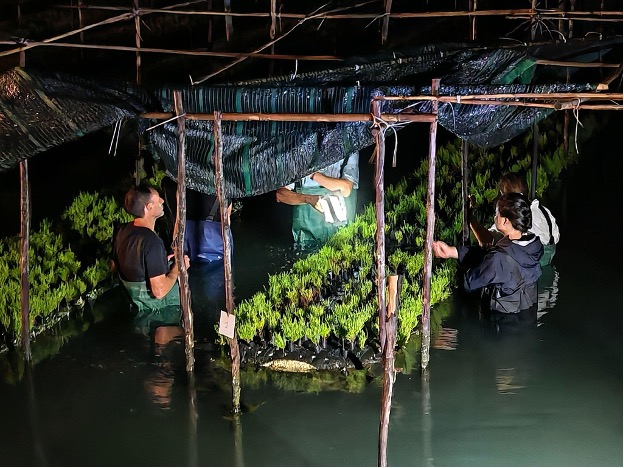
Despite Southeast Asia’s large production capacity, significant gaps remain in localized research and technical infrastructure. Much of the global innovation ecosystem for seaweed—including R&D funding, advanced processing technologies, and intellectual property development—is still concentrated in Europe and North America. Meanwhile, many producers in Southeast Asia continue to face limited access to climate-resilient solutions, disease management, technical training and scientific data.
Building stronger regional knowledge ecosystems through partnerships between startups, universities, governments, and coastal communities will be critical to unlocking innovation that is tailored to local market realities in the Southeast Asian blue economy.
Fragmented Infrastructure
The aquaculture and seaweed supply chain in Southeast Asia also remains highly fragmented.
In the case of seaweed, complex intermediary networks within the value chain contribute to price volatility and reduce margins for farmers and coastal producers. There is also limited access to hatcheries, climate-resilient seedlings, and processing infrastructure. While production capacity exists, value-added processing and downstream commercialization are still developing.
Future regional growth will be accelerated by reducing this fragmentation through solutions such as end-to-end traceability, ensuring that smallholder farmers are integrated into the supply chain, rather than excluded from it, as well as more processing in the region.
Building the Ecosystem
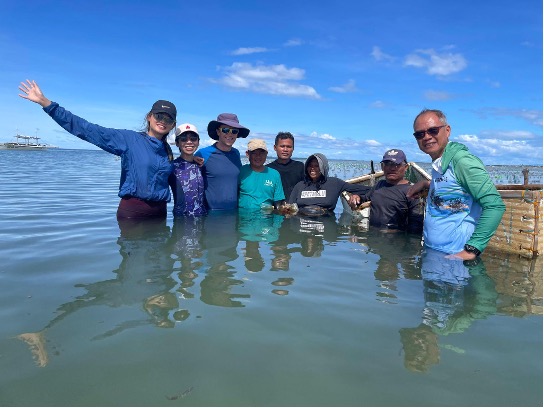
Capital alone doesn’t build markets—ecosystems do. Through collaborative action, we can truly scale the blue economy in Southeast Asia.
At Potato Impact Partners, we lead programs and initiatives to bring stakeholders together for learning and engagement. This includes our biannual Seaweed Squad Investors Call, leading working groups in coalitions such as 1000 Ocean Startups, and helping organize learning activities, such as a recent seaweed study tour to South Korea. We also participate in knowledge sharing when possible, such as through our whitepaper, speaking on industry panels, and sharing investment notes and diligence with co-investors.
Through our capital, we send a market signal that what we invest in matters. Through our time and collaboration, we can build partnerships across various stakeholders to strengthen the entire value chain.

About the Author: Tessa Charupatanapongse is Investment Lead at Potato Impact Partners, an impact investor spurring positive contributions to food security, climate action, and the resilience of coastal communities through investments in sustainable seaweed innovation. Tessa leads deal sourcing and due diligence and drives ecosystem building within the sustainable seaweed aquaculture value chain.
Preferred Contact: hello@potatoimpactpartners.com


